


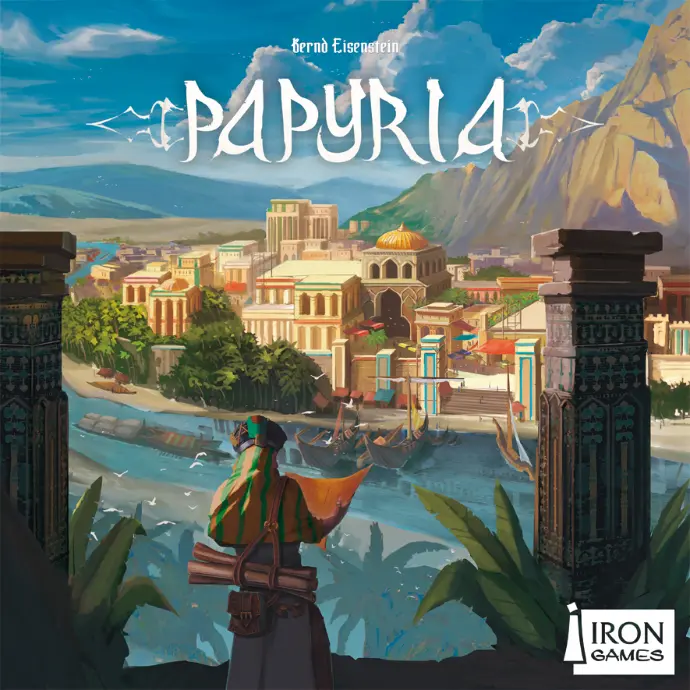

Mesopotamia, around 1500 BC: The Mesopotamian region on the Euphrates and Tigris is home to a melting pot of different cultures. Achievements such as writing and the wheel lead to the construction of the first large cities and lively trade. In the mountains, the coveted lapis lazuli is mined, and papyrus is made from reed grass.
In Papyria, you explore the region to create an extensive network of canals; discover inventions; develop mines; and build temples, sanctuaries and cities.
During your turn, you move your wanderer or ship. On the target space, you choose two of the three possible actions, which can mean taking a new tile for your display or a multiplier for later scoring; building a city, a temple, or a mine; or producing lapis or papyrus, which you need for building, special actions, or special scorings.
The game ends as soon as the last good has been taken from several spaces and a certain number of "end-of-game" tiles have been revealed and fulfilled. After several final scorings, whoever has the most points wins.
The mighty castles and sprawling cities of Rokugan are merely tiny islands of civilization in the vast wilderness that surrounds and envelops the Emerald Empire. From the dark and haunted depths of the Shinomen Mori forest to the sharp and icy peaks of the Great Wall of the North mountains, these ancient and wild lands hold countless dangers for the unwary. Only the wise samurai of the Dragon Clan embrace their writ to live in the wilds, and create the bridge between this world and civilization.
Writ of the Wilds explores the wilds of Rokugan, as well as the mysterious Dragon clan who makes these lands their home. In this sourcebook for the Legend of the Five Rings Roleplaying Game, you will find exciting new information on gaming in the Rokugani wilderness and the territories of the Dragon, including:
Tales of the strange beings and spirits that haunt the Shinomen Mori, and the various cultures and species that live outside of Rokugan’s society.
Rules for the Dragonfly minor clan, plus new schools, kiho, kata, and rituals designed to bring the monastic culture of the Dragon to your game. You also gain access to rules for playing new non-human species such as Shinomen Nezumi, Naga, and Tengu, and also playing members of the Yobanjin Groups who live in the Great Wall of the North.
A wealth of information on temples and monasteries, and GM support on how to include these settings in your game.