
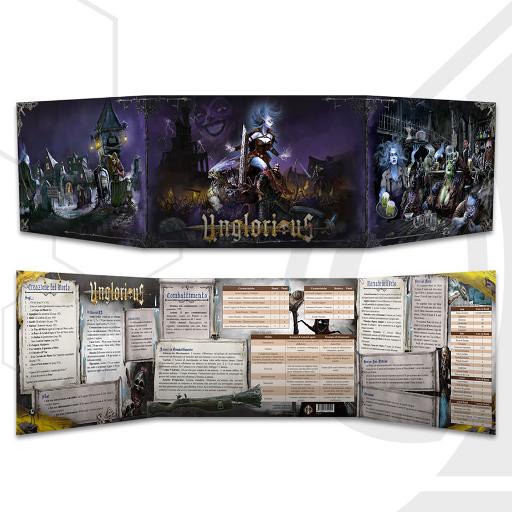
In the Orchard, bureaucracy is everything! Without it, the world of the dead would be overrun by scrambling corpses at the mercy of utter chaos--perhaps more serene, but still decidedly disoriented. If Death Certificates and Licenses are important, the Ferryman's Screen is the ultimate expression of bureaucratic and regulatory control of the world of the dead. Initially designed to conceal the depressing expression of the Pities, now it has become a set of rules and advice most useful for dealing with your sessions in the world of Unglorious. The Ferryman Screen is not designed for cheating with dice rolls. Any misuse of its original function will be sanctioned by the Lords of the Orchard -- assuming anyone can see you. Unglorious: Ferryman's Screen, is an accessory for the necro-fantasy RPG Unglorious. The Ferryman's Screen features: 3 panels beautifully illustrated by artist Vincenzo Pratticò; 14 between mirrors and tables ranging from the Dead Creation to the Marketplace of the Orchard.
The mighty castles and sprawling cities of Rokugan are merely tiny islands of civilization in the vast wilderness that surrounds and envelops the Emerald Empire. From the dark and haunted depths of the Shinomen Mori forest to the sharp and icy peaks of the Great Wall of the North mountains, these ancient and wild lands hold countless dangers for the unwary. Only the wise samurai of the Dragon Clan embrace their writ to live in the wilds, and create the bridge between this world and civilization.
Writ of the Wilds explores the wilds of Rokugan, as well as the mysterious Dragon clan who makes these lands their home. In this sourcebook for the Legend of the Five Rings Roleplaying Game, you will find exciting new information on gaming in the Rokugani wilderness and the territories of the Dragon, including:
Tales of the strange beings and spirits that haunt the Shinomen Mori, and the various cultures and species that live outside of Rokugan’s society.
Rules for the Dragonfly minor clan, plus new schools, kiho, kata, and rituals designed to bring the monastic culture of the Dragon to your game. You also gain access to rules for playing new non-human species such as Shinomen Nezumi, Naga, and Tengu, and also playing members of the Yobanjin Groups who live in the Great Wall of the North.
A wealth of information on temples and monasteries, and GM support on how to include these settings in your game.