

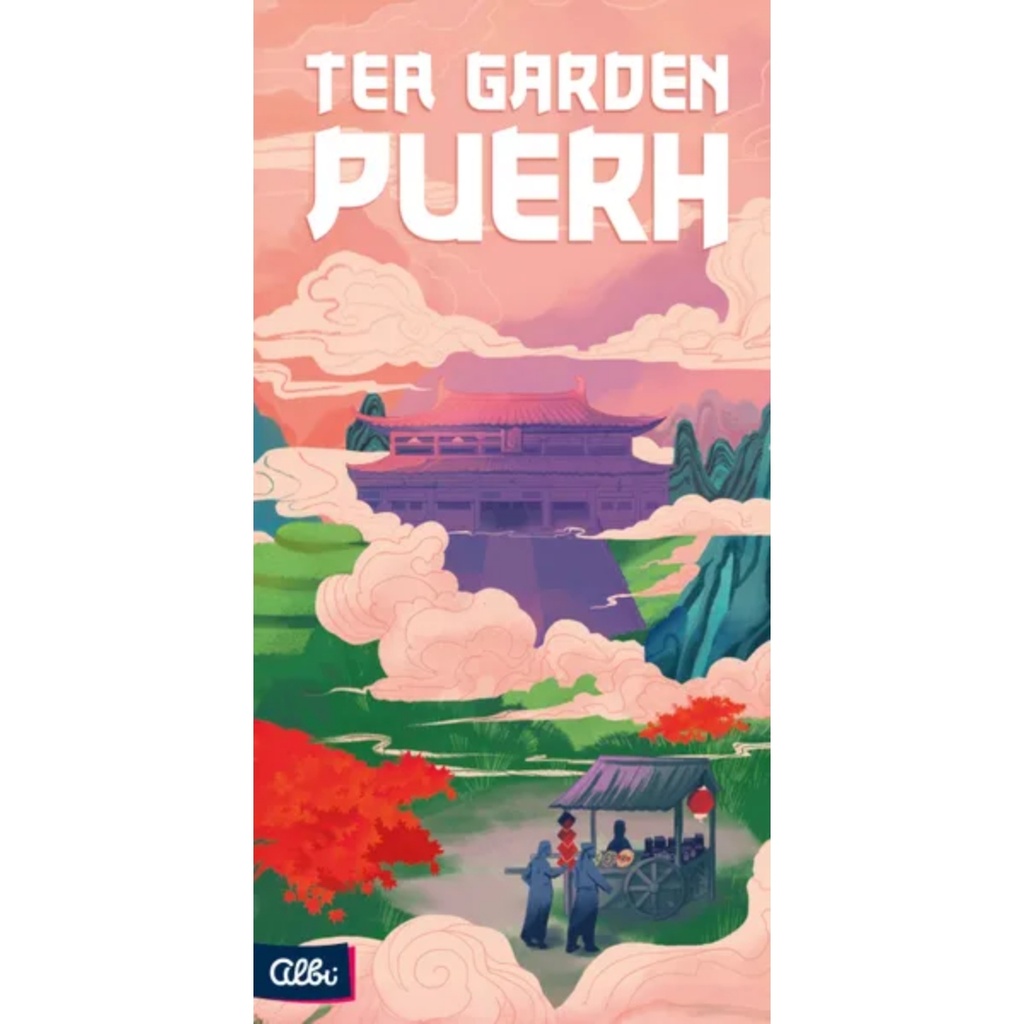

The Puer expansion enhances the game with Court of Nobles, enriching your options with two new main actions - bringing the total to seven, and the special Imperial decrees then bring even more complexity to the game and expand your strategic choices.
As a first new action you can visit the Court, for which you'll use the new Courtier meeples. The halls of the Court not only bring immediate bonuses but also points at the end of the round if you hold the majority there.
The second new action is the puer market - featuring pieces that can be linked together to earn bonuses not only from newly added pieces, but also from previous ones. Careful planning is therefore much desirable. In addition, completed puers also help to earn points at the end of the game.
It is necessary to be prepared for the fact that the complexity of the Tea Garden increases quite significantly with this expansion, and the time required to play the game is also a bit longer than without it. The Puer expansion also contains components for Solo play.
—description from the publisher
The mighty castles and sprawling cities of Rokugan are merely tiny islands of civilization in the vast wilderness that surrounds and envelops the Emerald Empire. From the dark and haunted depths of the Shinomen Mori forest to the sharp and icy peaks of the Great Wall of the North mountains, these ancient and wild lands hold countless dangers for the unwary. Only the wise samurai of the Dragon Clan embrace their writ to live in the wilds, and create the bridge between this world and civilization.
Writ of the Wilds explores the wilds of Rokugan, as well as the mysterious Dragon clan who makes these lands their home. In this sourcebook for the Legend of the Five Rings Roleplaying Game, you will find exciting new information on gaming in the Rokugani wilderness and the territories of the Dragon, including:
Tales of the strange beings and spirits that haunt the Shinomen Mori, and the various cultures and species that live outside of Rokugan’s society.
Rules for the Dragonfly minor clan, plus new schools, kiho, kata, and rituals designed to bring the monastic culture of the Dragon to your game. You also gain access to rules for playing new non-human species such as Shinomen Nezumi, Naga, and Tengu, and also playing members of the Yobanjin Groups who live in the Great Wall of the North.
A wealth of information on temples and monasteries, and GM support on how to include these settings in your game.